
E-grocery: new app category and feedback increase
An eco-conscious grocery brand that originally sold only its own product line.
- Product:
- iOS App
- Role:
- Product designer

Supermarket - a new category
Problem
Customers have to use multiple delivery services to get their full range of groceries, which sometimes leads them to choose other shops over Vkusvill.
Goal
Help users order products from other brands without switching between apps.
Research
We analysed user purchases from uploaded receipts of other shops (the "Diverse Nutrition" campaign), then added the most popular products to a new "Supermarket" category in the catalogue.
A/B testing
A/B testing revealed that the new category was unfamiliar to users and they didn't engage with it.
Hypothesis
If we clearly communicate what this category offers, users will interact with it more often.
User interviews
Customers use Vkusvill alongside other shopping apps. They buy eco-food from Vkusvill and get everything else from other retailers.
People tend to choose familiar products they've already tried or used for a long time, such as well-known brands.
Some users were unhappy with the quality of Vkusvill's laundry products: despite being eco-friendly, they didn't clean clothes well enough.
Solution
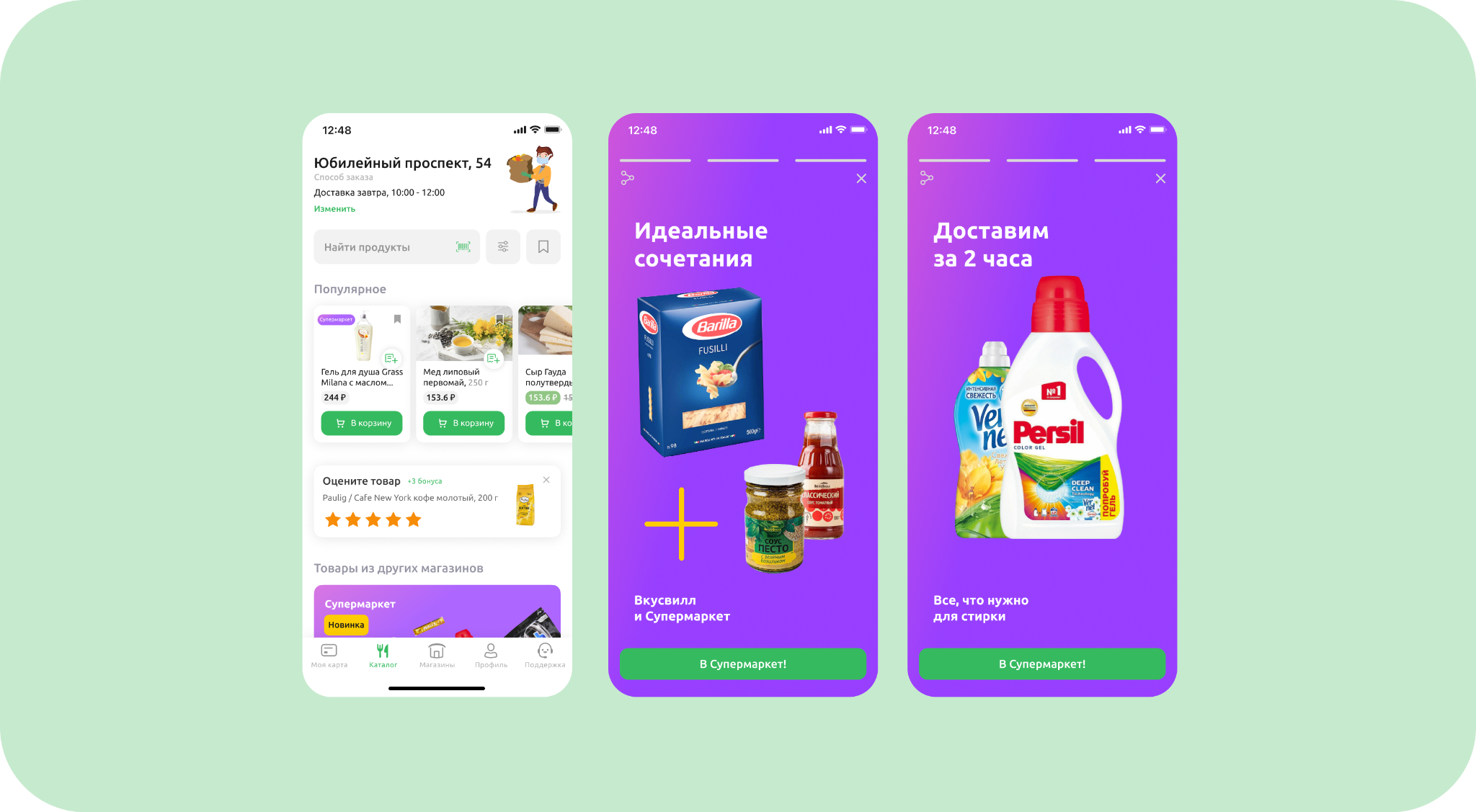
Big promo banner (entrance point)
We placed the new category separately, with a header explaining that Vkusvill now offers products from other shops.
Stories
We introduced stories that included:
- Delivery information and images of products users had been searching for
- How Vkusvill products complement well-known items from other shops
Increasing order feedback
Problem
Users rarely leave feedback. Products with more ratings tend to sell better, while those with fewer ratings get less trust and fewer purchases.
Hypothesis
The current feedback process is unintuitive and takes too much effort, so most users skip it.
Research
We conducted user interviews to understand how and why users leave feedback.
Key findings
The feedback form is just a large text field. Users are reluctant to write a lengthy review.
Users tend to buy products with high ratings, so feedback directly influences purchase decisions.
Users are more likely to leave feedback when motivated by incentives like bonuses or discounts.
Solution
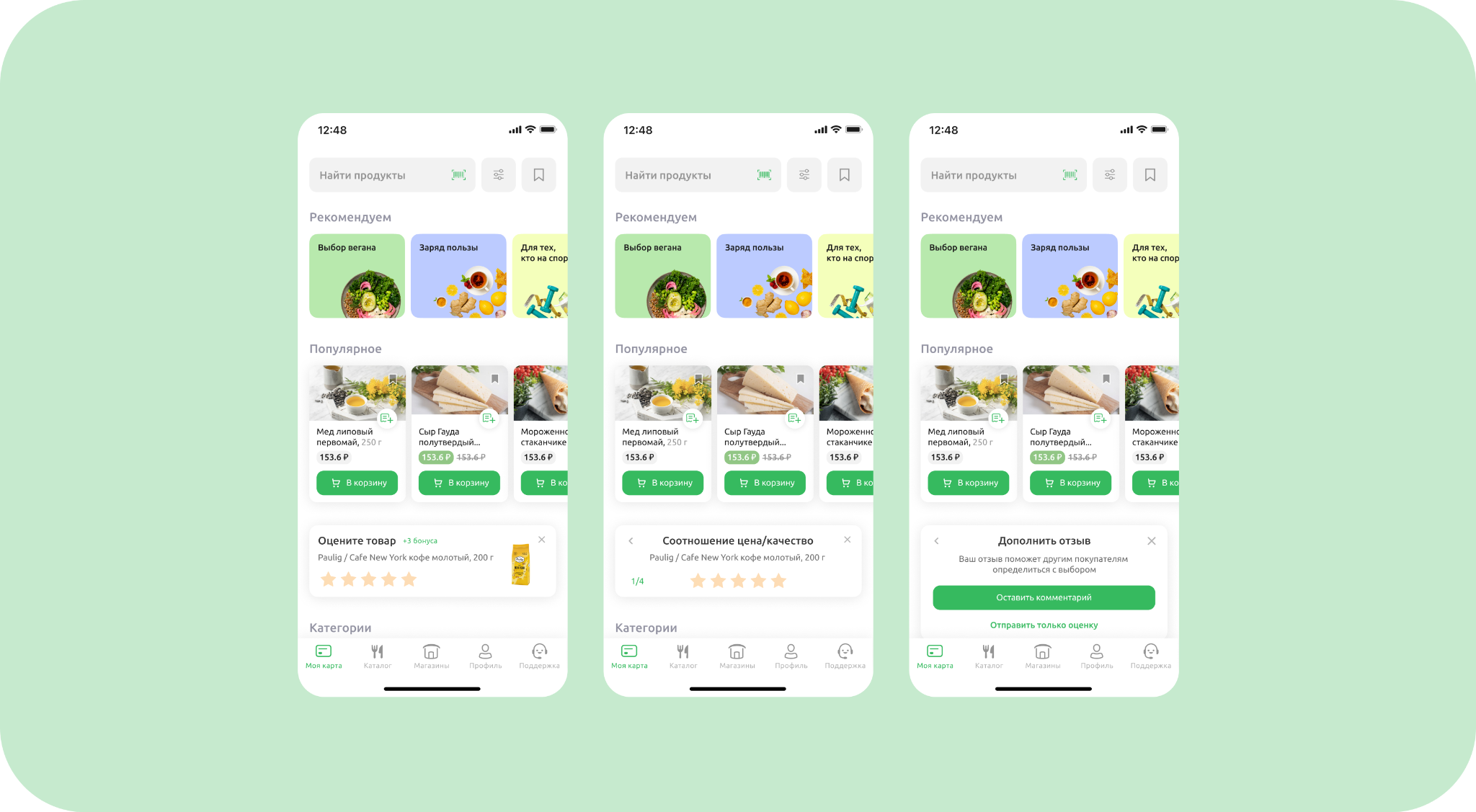
Individual criteria
Users rate products by specific criteria, e.g. taste and aroma for coffee beans. Each rated product earns bonus points to keep users motivated.
Diving deeper
After rating by criteria and stars, users can optionally write a text review.
Appropriate timing
Reviews are requested about 2 weeks after purchase, giving users enough time to properly test the product.