
Product
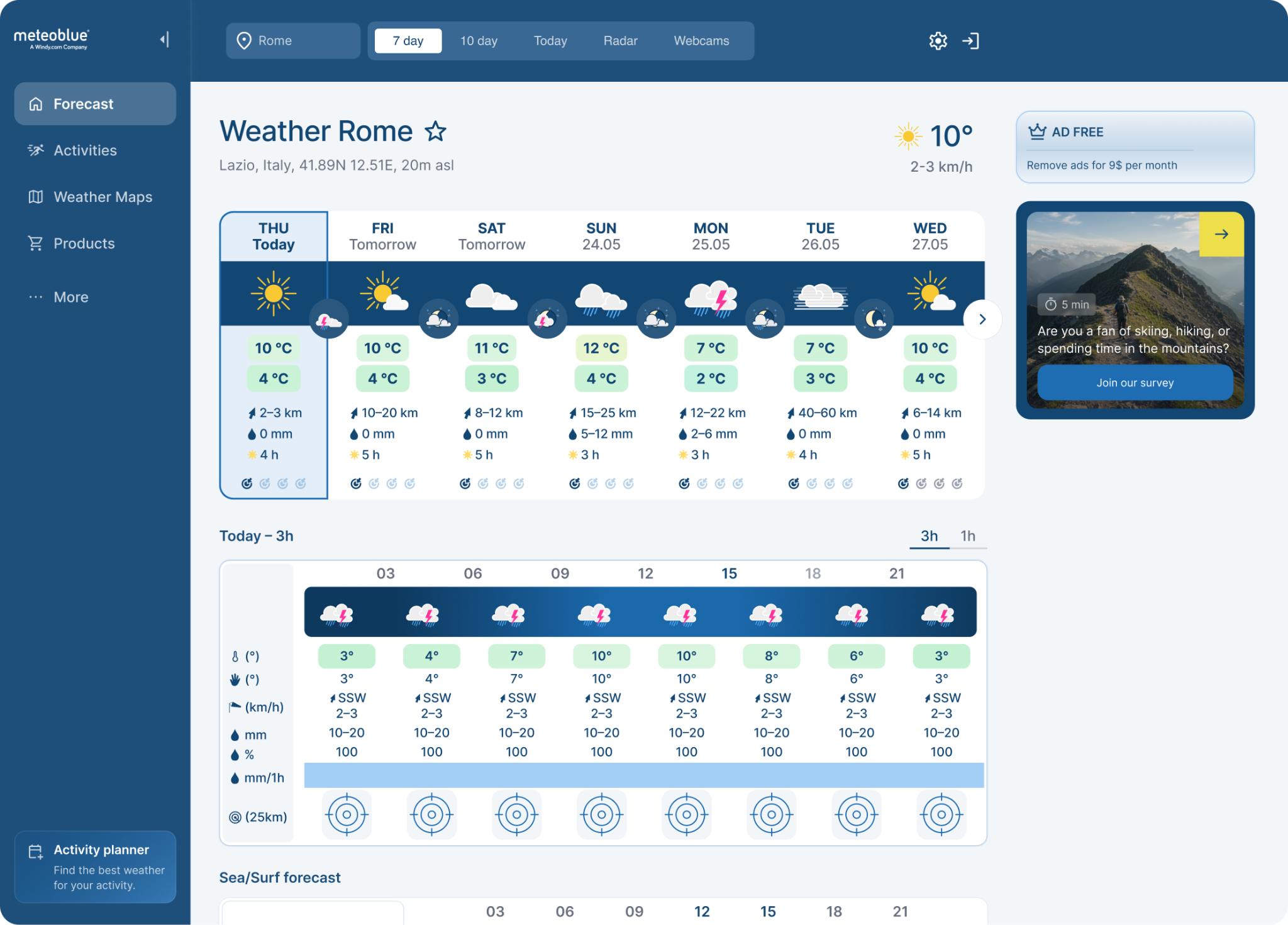
Weather platform: activity planner
Audience
- hikers
- mountain guides
- skiers
- paragliders
- pilots
- climbers
- outdoor travelers
- weather enthusiasts
Business problem
Few website visitors end up purchasing a point+ subscription.
User research
A survey of 168 users about paid features found that many enjoy outdoor activities, with hiking the largest segment.
60%
subscribers
discovered premium features only by exploring the website on their own.
74%
paying subscribers
were unaware of at least one feature included in their subscription.
88%
paying subscribers
considered the subscription price fair.
Largest user segment research
After discovering that hikers are the largest segment among paid subscribers, we decided to research their needs in depth.
458 respondents
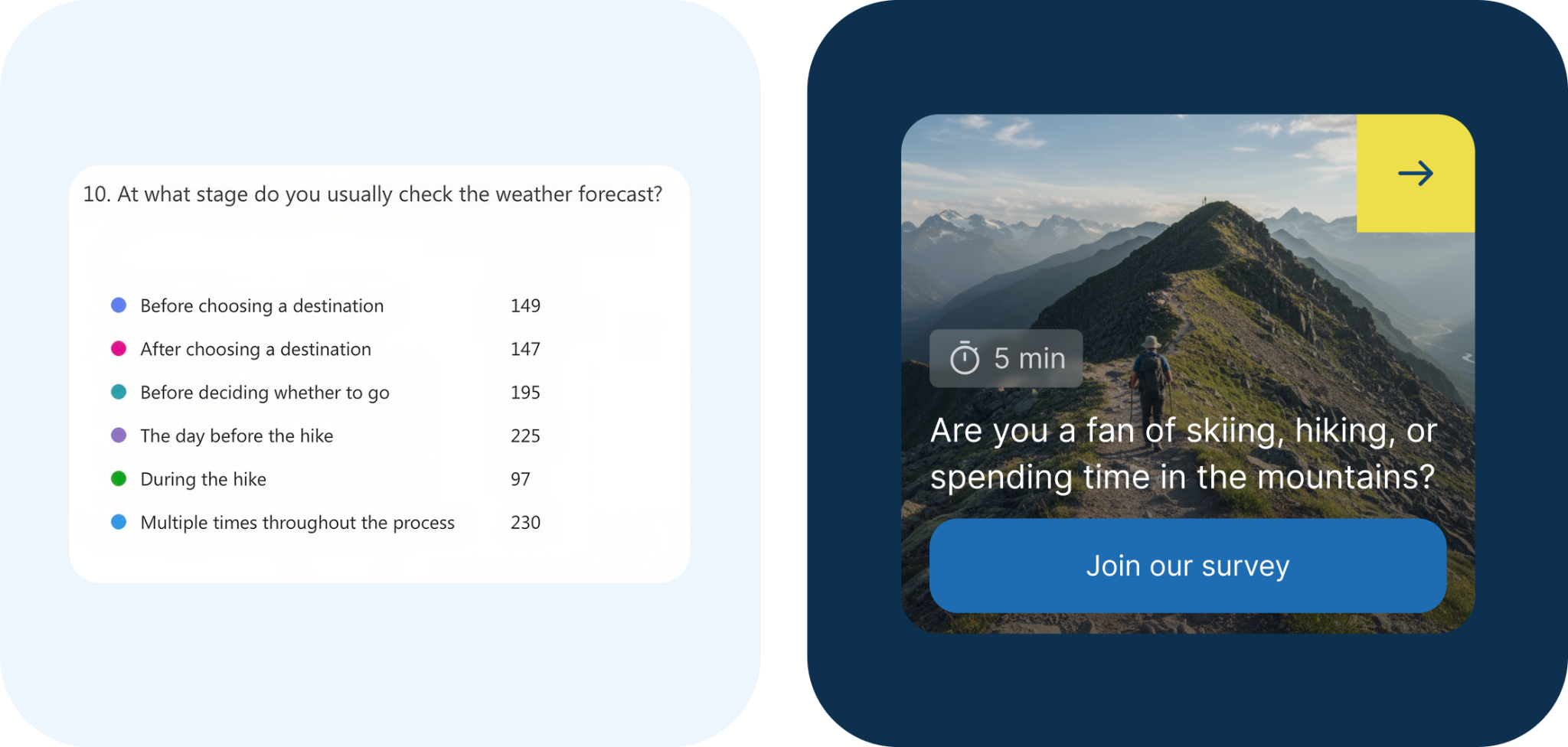
Findings
Triggers, frequency and terrain
Mountains
preferred terrain
The most popular hiking destination is mountain trails.
2x / month
hiking frequency
Most people go hiking about once every two weeks.
Free days / Good weather
top trigger
A free day on the calendar and good weather are the main motivators.
Findings
Planning and forecast
1–7 days
planning window
Hikes are planned a week or just days in advance.
Precipitation
#1 weather check
Rain, storm risk, temperature, and wind are the most checked conditions.
Elevation
forecast focus
People check forecasts for specific elevation points along their route.
Hypothesis
If we help hikers plan trips with weather in mind, they'll see more value in Premium features and upgrade more often, it could drive up free-to-paid conversion by 3%.
CJM
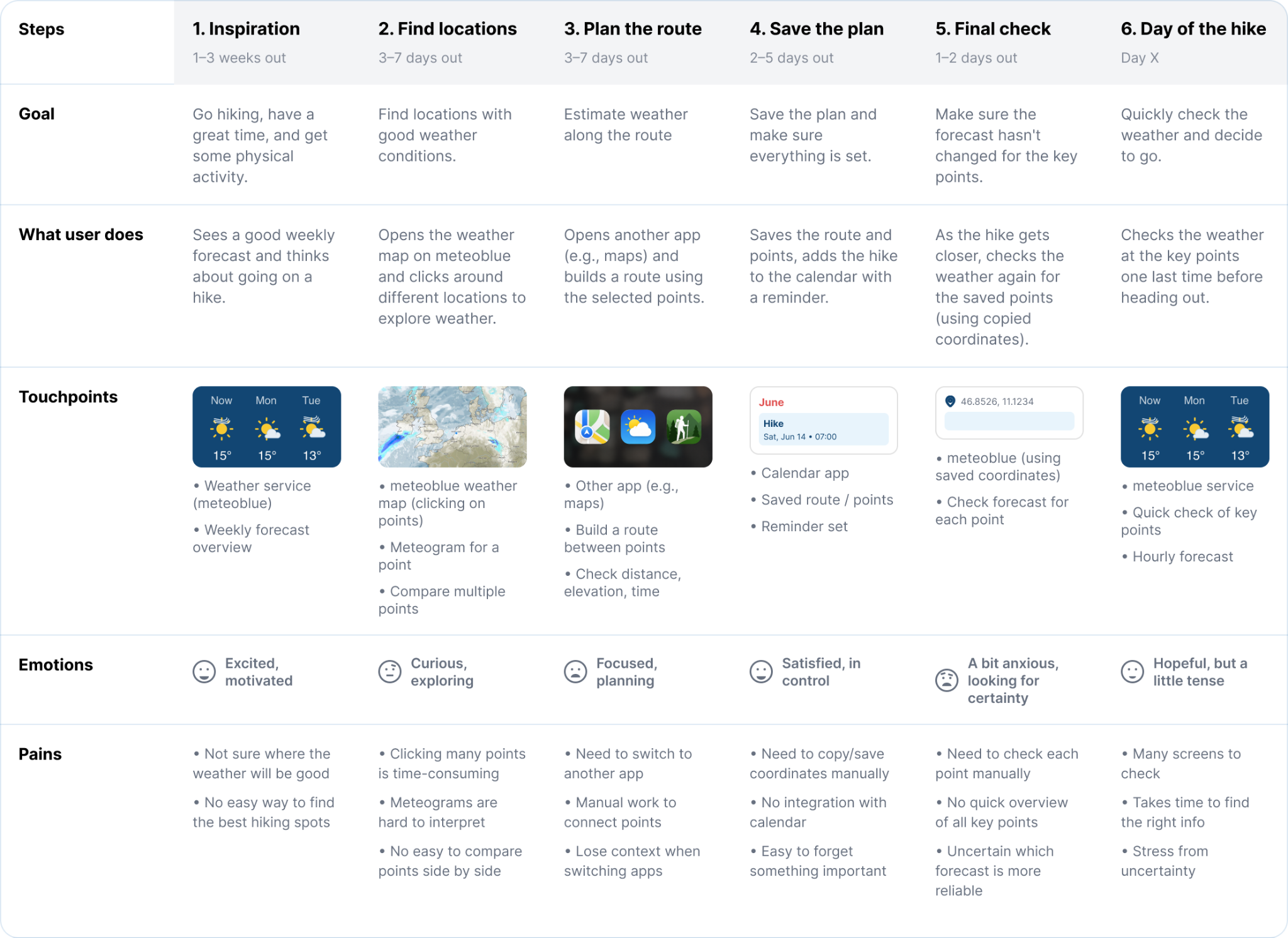 CJM
Key findings
- Too many manual steps to make a go/not go decision
- Tracking key points requires app switching
- Users repeatedly check the weather at different stages of planning
Opportunities
- Simplify exploring forecasts across locations
- Simplify the go/no-go decision for a hike
- Help the user choose exactly where to go
- Quickly return to a saved point or route
Approach
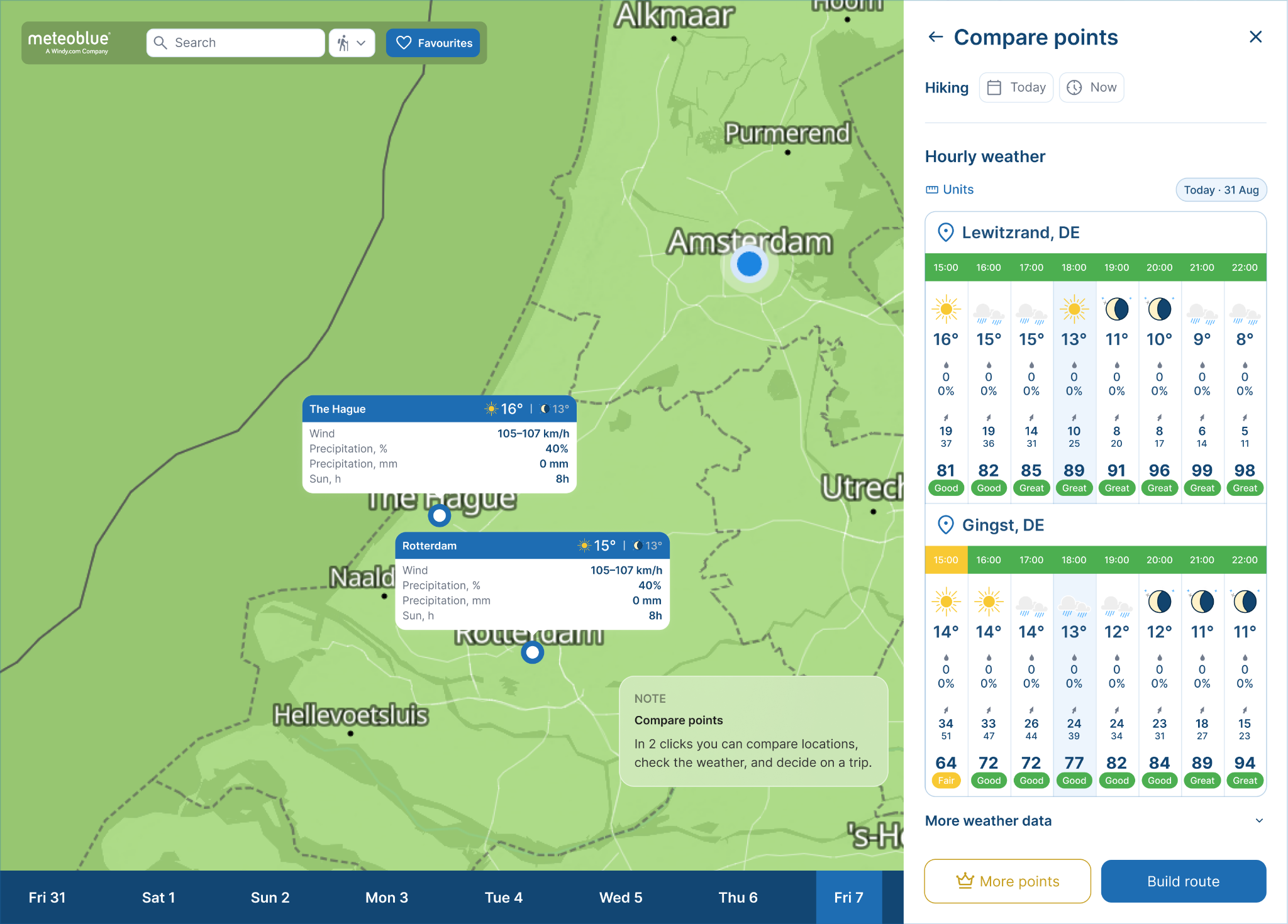
Opportunity 1Compare
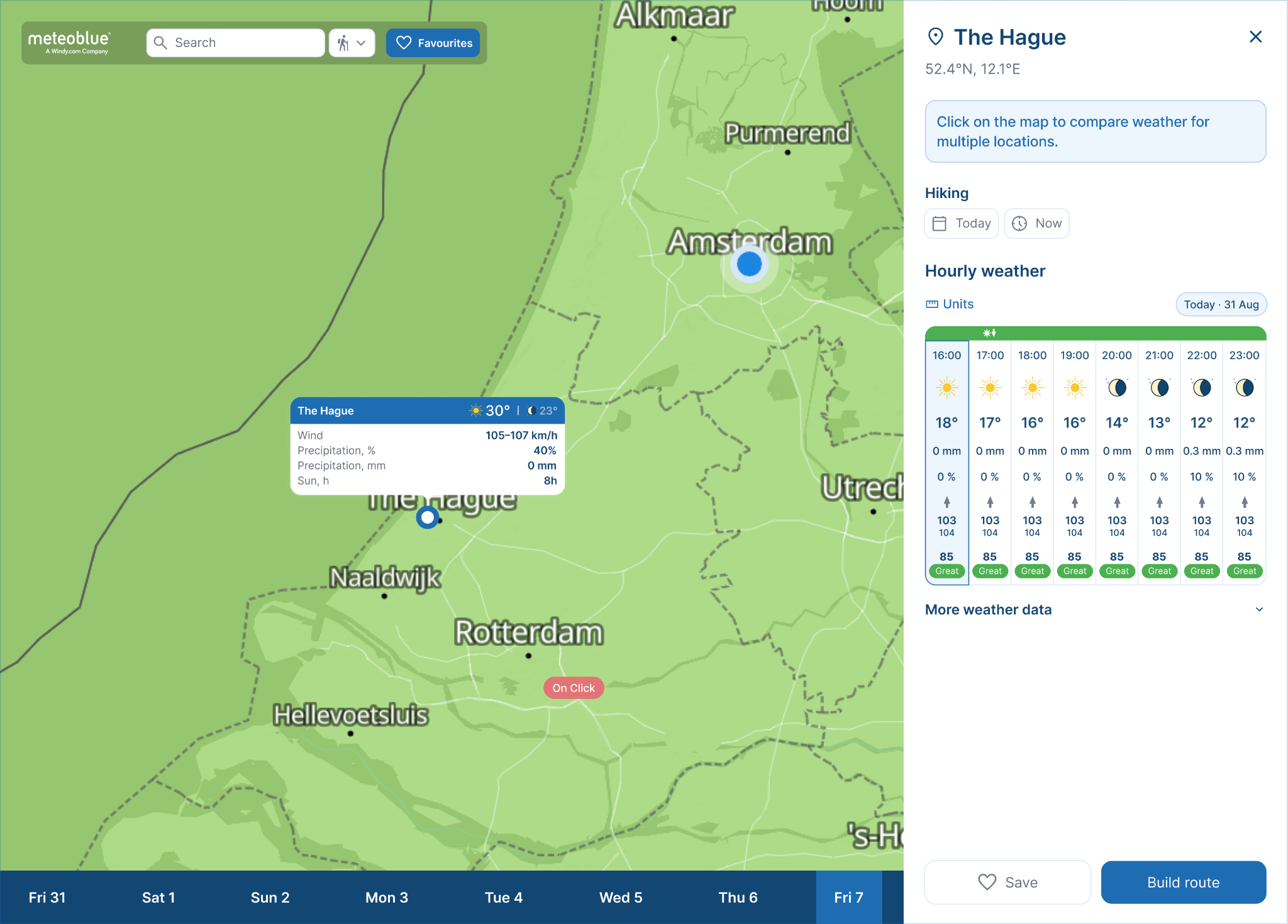
Help users choose a hiking location by comparing weather conditions at multiple points.
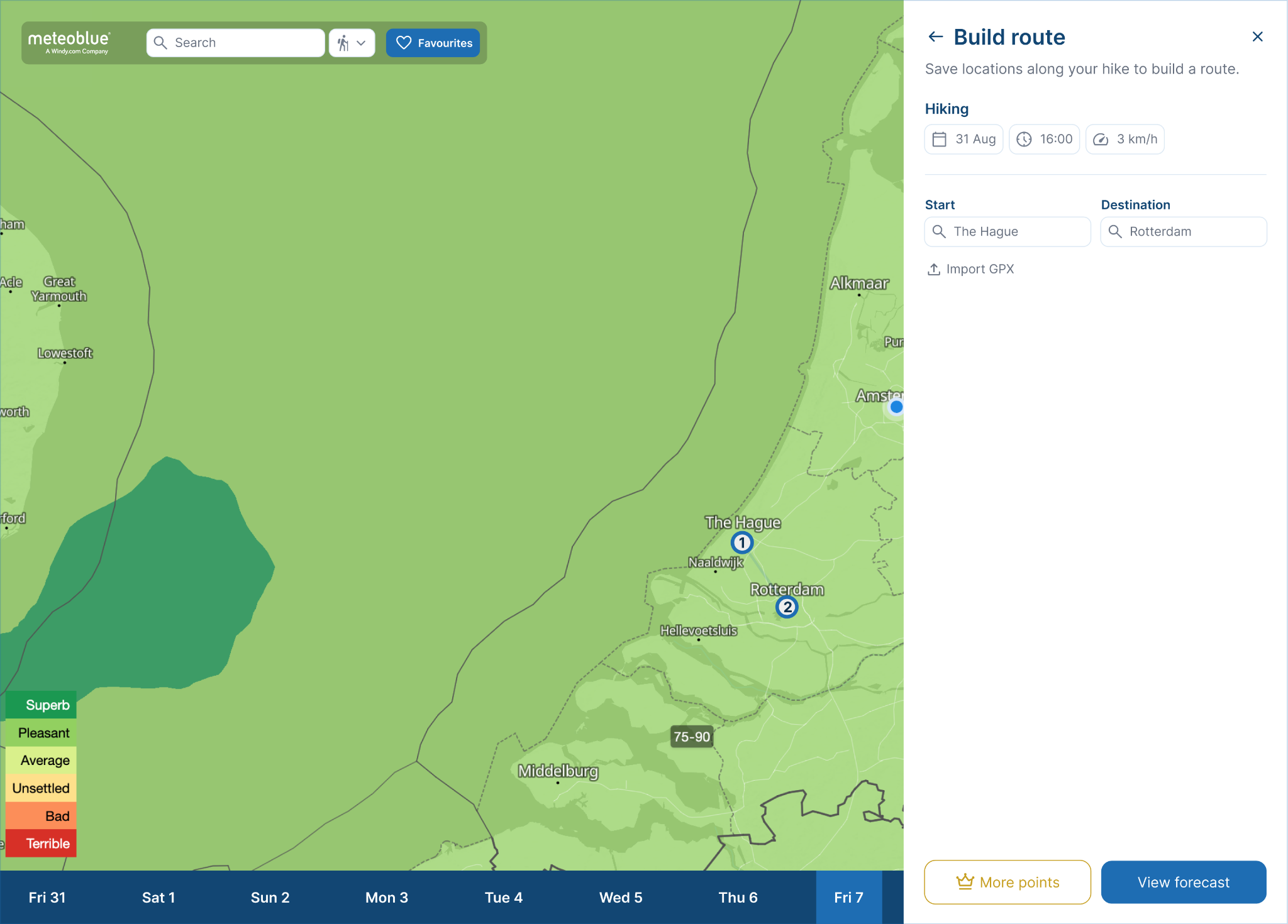
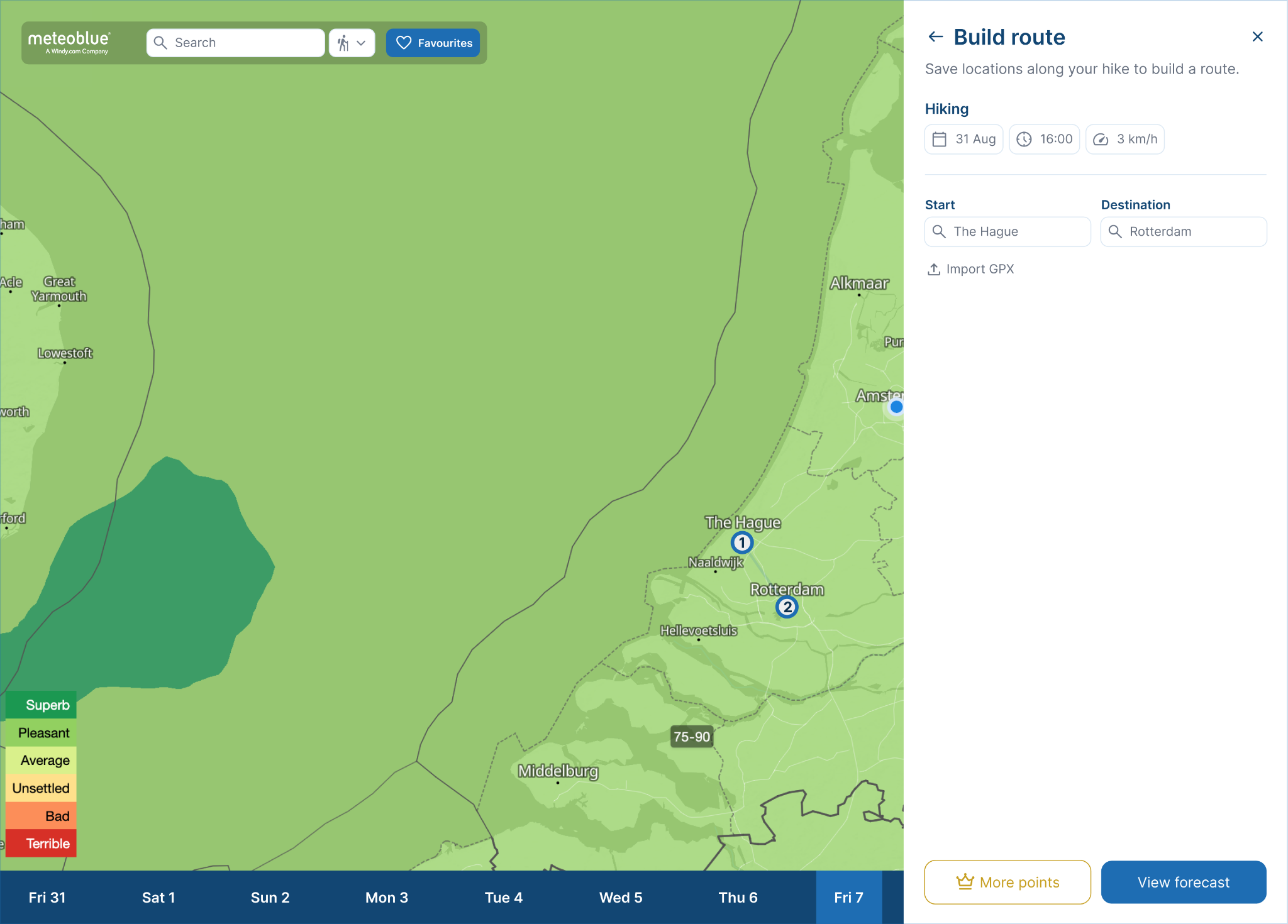
Opportunity 2Build route
Help users plan a hike and access weather forecasts along it.
Solution
User flow
I combined 2 paths: comparing points and building a route into one seamless flow, covering the needs of different user types. This is important — it's your idea and the foundation of the interface.
Screens
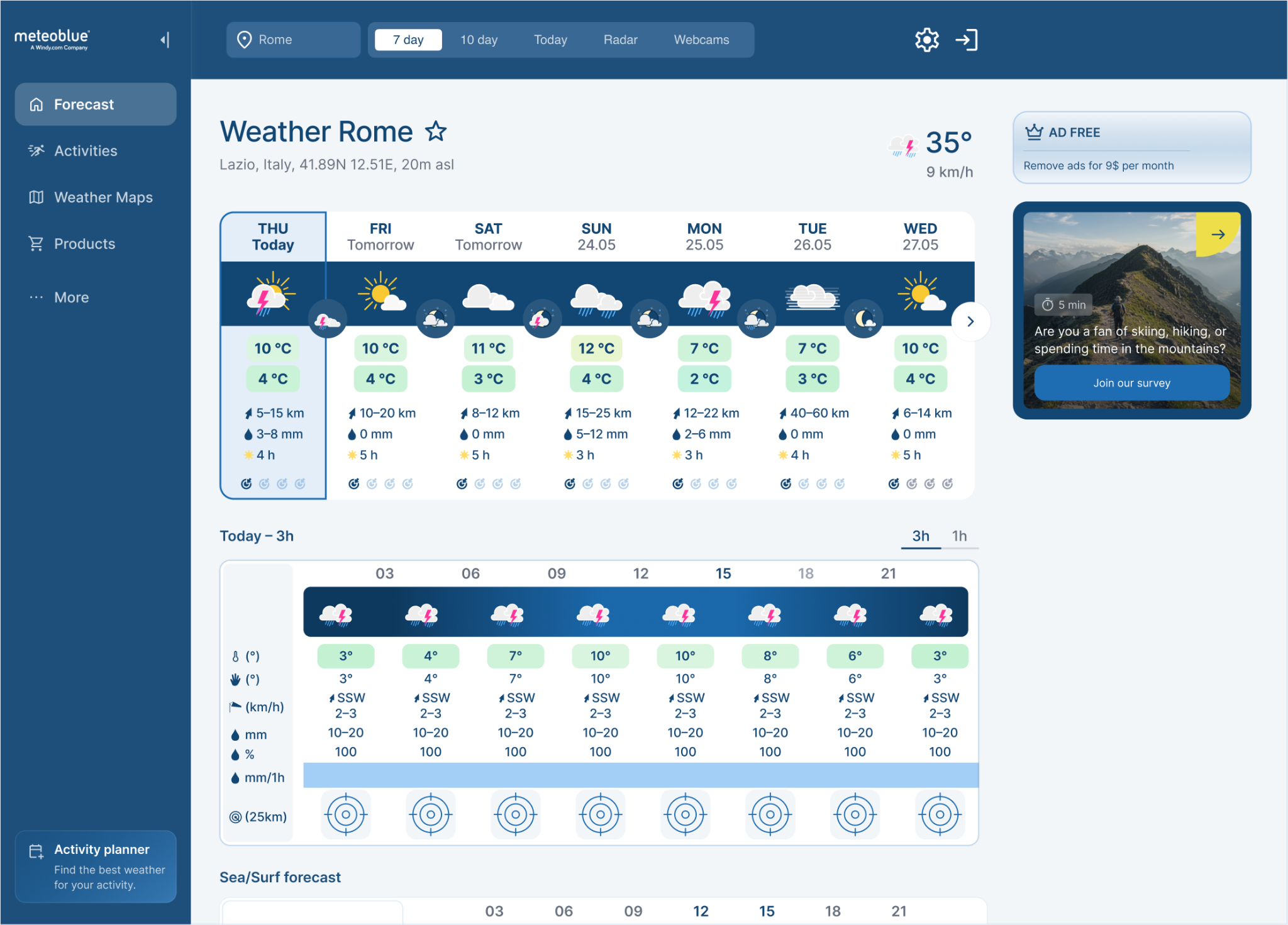
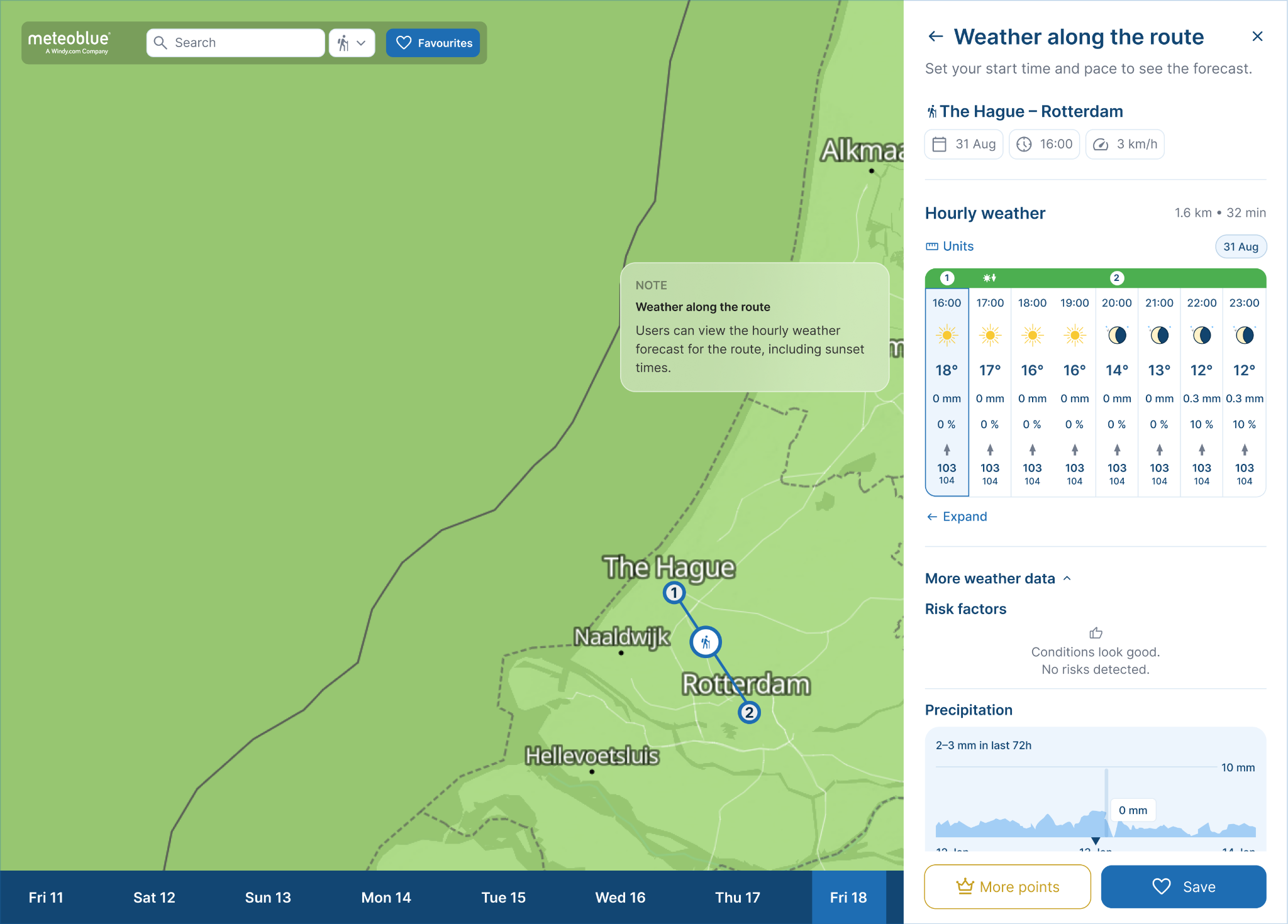
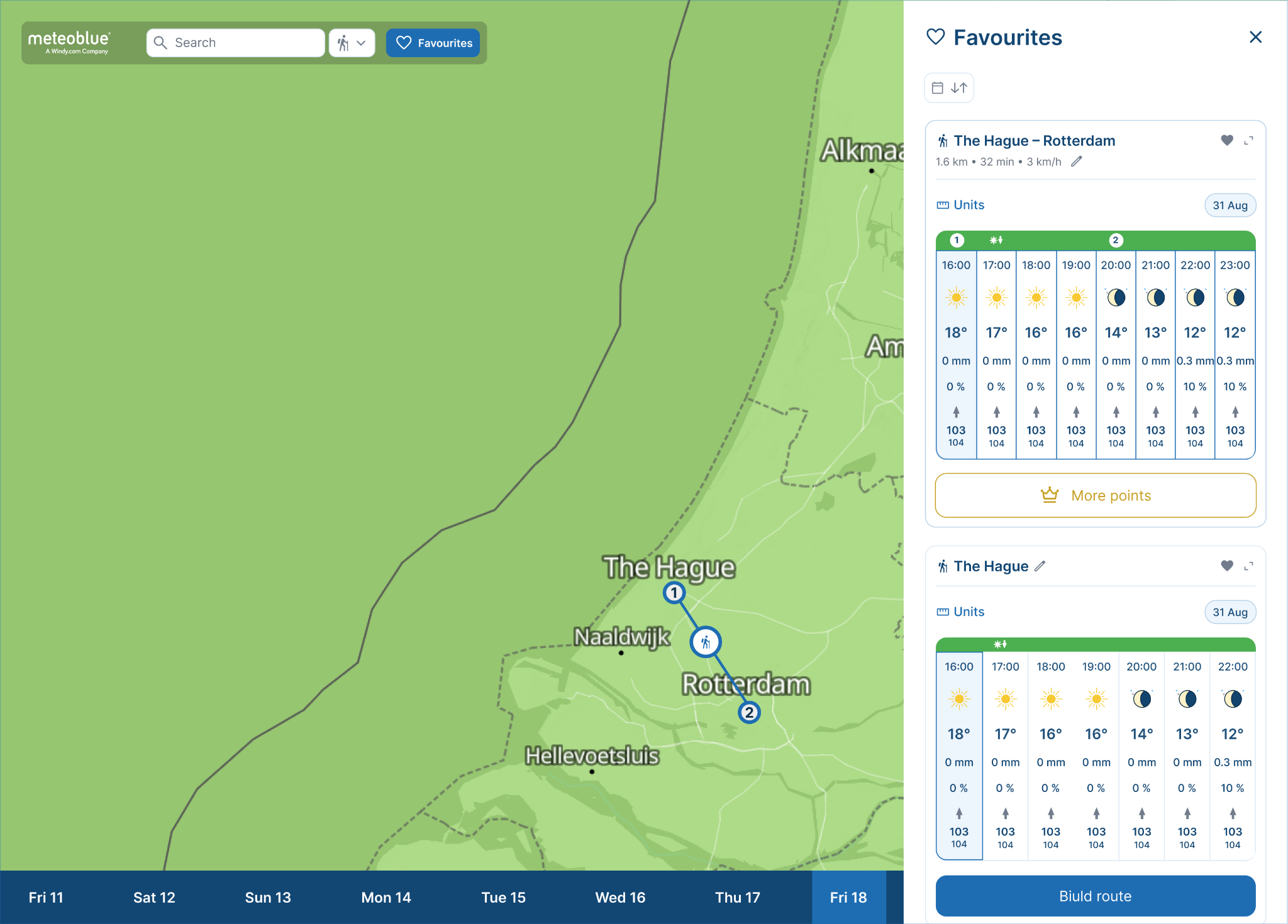



Monetisation
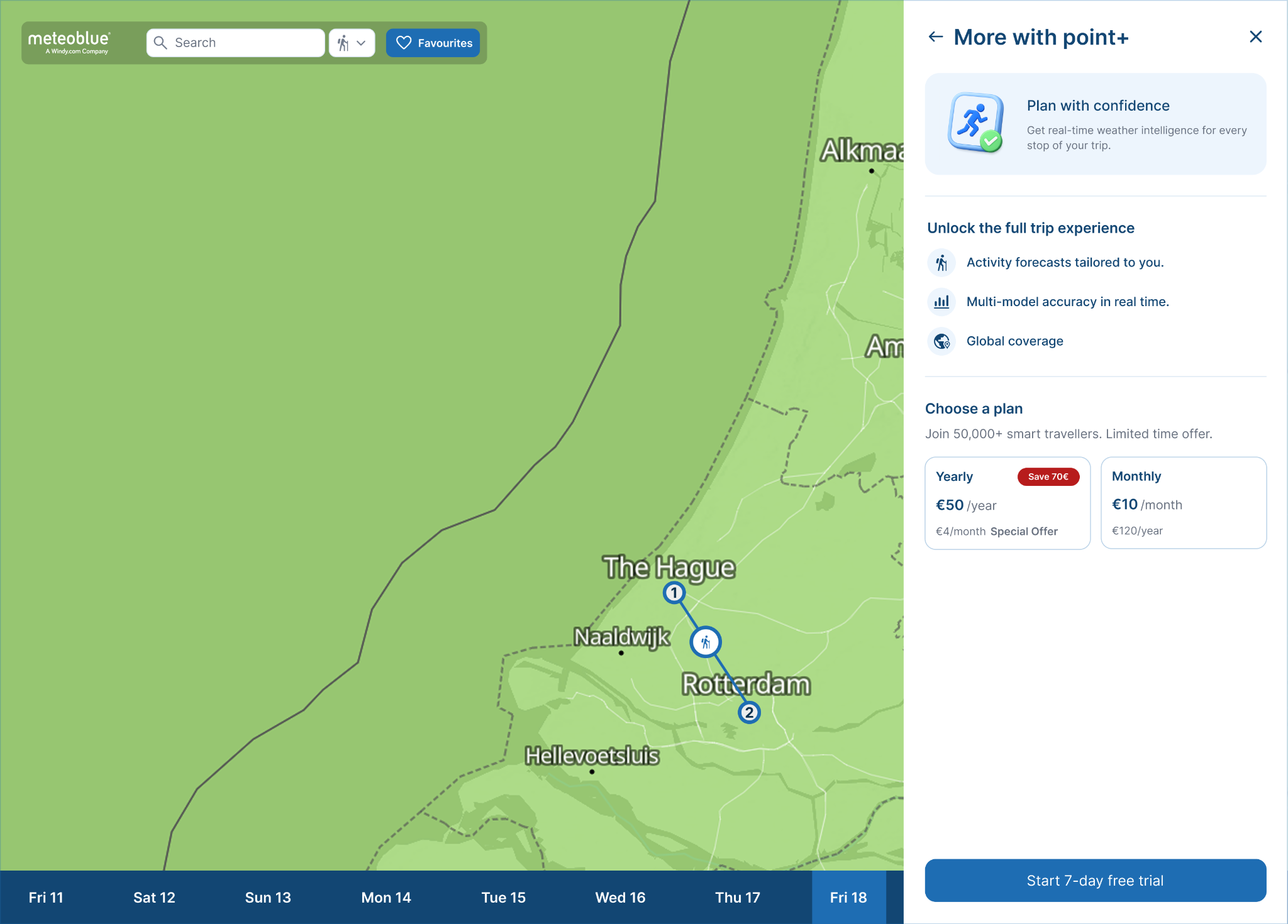
We first let the user experience the core value, and only then show the paywall.
Upgrade prompts appear in Build Route, Weather Along the Route, and Favourites.

Design system and UI
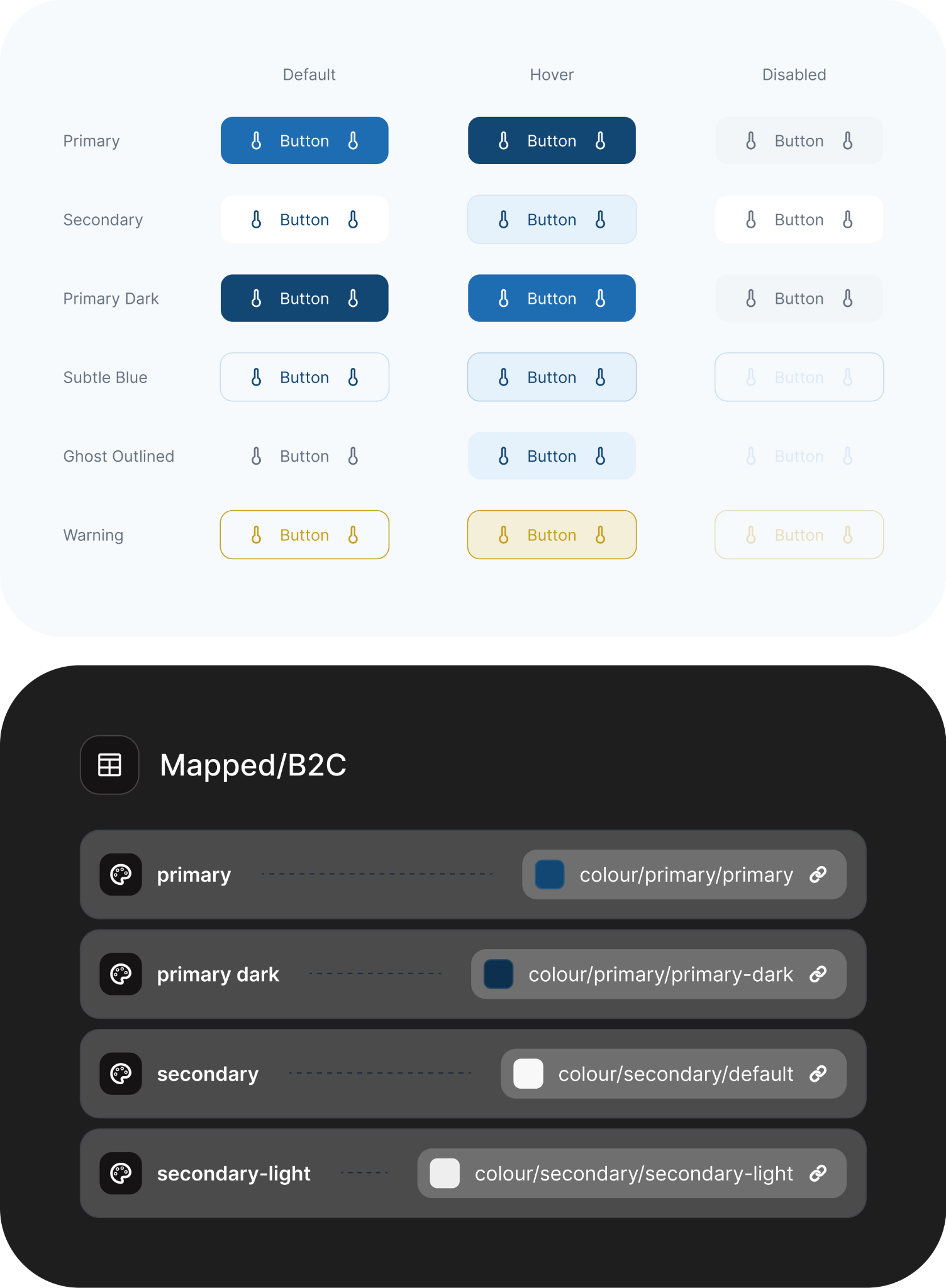
I use the meteoblue design library for the app, B2C and B2B products to keep our brand consistent.
User testing
Research methodology
Moderated usability testing with 20 participants, split equally between the meteoblue prototype and Windy.
meteoblue prototype
Tested two hiking planning scenarios — Weather-first and Route-first — to evaluate usability, task completion and user preferences.
Windy
Evaluated the bottom-sheet UX and its effectiveness in supporting weather-based decisions.
Data collection
Think-aloud testing, behavioural observations, task success rates and post-test questions.
Research goal
Identify usability issues, understand user needs and inform future product design decisions.
Results
Coming soon.